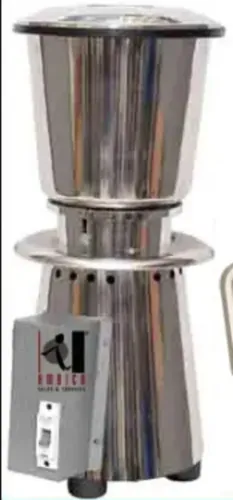
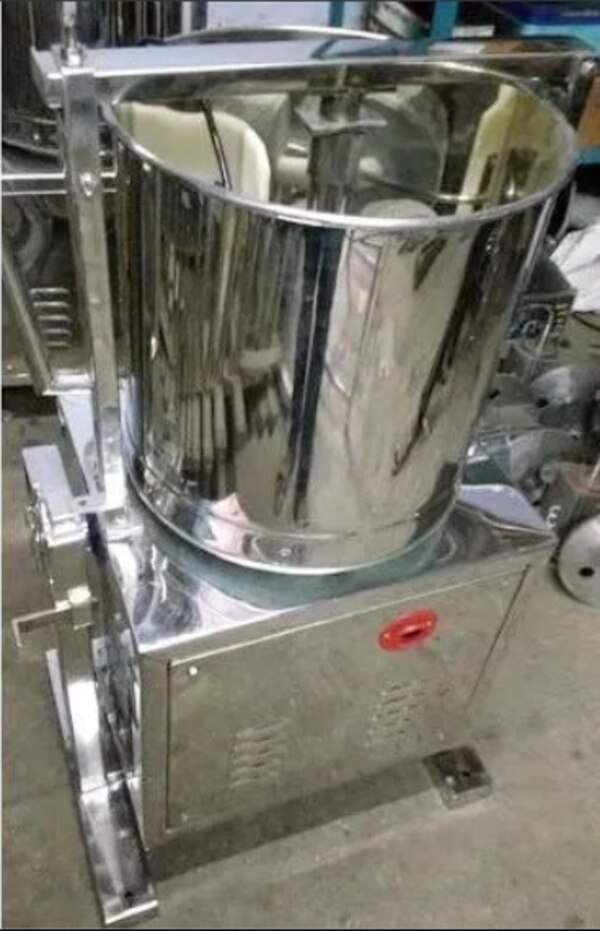
A tilting stainless-steel grinder is only a good purchase when its grinding system, usable batch size, electrical supply and cleaning access match your production routine. By the end, you will be able to compare specifications, test a machine with your own ingredients and assess whether the quoted Mumbai price reflects the equipment you actually need.
Key takeaways
- Choose wet grinders for batter, chutney, wet masala and curry bases.
- Compare usable batch capacity, hourly output and motor power—not drum size alone.
- Inspect stone condition, food-contact welds, seals and cleaning access.
- Run a loaded tilt demonstration before comparing tilting grinder prices in Mumbai.
Match the Grinder to the Work on Your Menu
Choose a tilting grinder when your menu needs repeatable wet batches, not fine dry pulverising or high-speed emulsification. A batter wet grinder suits idli and dosa batter, coconut grinding, chutney, wet masala, curry bases and spice pastes.
Its stone assembly handles soaked ingredients while the tilting drum lets you transfer a heavy mixture without lifting the full vessel.
| Machine | Best restaurant work | Choose another machine when |
|---|---|---|
| Tilting batter grinder | Idli-dosa batter, coconut, chutney, wet masala and curry bases | You need dry spice powder, minced meat or very smooth emulsion |
| High-speed mixer grinder or colloid mill | Fast spice pastes, sauces and smooth emulsions | Stone grinding gives the texture your batter or chutney requires |
| Planetary mixer | Dough, whipped cream, mayonnaise and thick bakery mixtures | The recipe depends on soaking and stone-grinding rice, dal or coconut |
| Food processor | Chopping onion, vegetables, herbs and coarse fillings | You need a wet, uniform paste rather than chopped particles |
| Meat mincer | Keema, sausage mix and portioned minced meat | The work involves batter, chutney or curry paste |
For a stainless steel tilting grinder for restaurants, match the drum size to your actual batch, not the largest menu item. A 20-litre vessel does not produce 20 litres of usable batter after ingredient clearance and safe operating space.
Choose a separate machine for dry powders, meat, dough or continuous sauce production; forcing those jobs through the grinder causes poor texture, overheating or slow service.
Compare Usable Capacity, Throughput and Electrical Demand
A 20-litre drum does not produce 20 litres of batter per cycle. Compare the recommended flour-and-water batch, grinding time and final discharge yield; nominal volume only describes the vessel’s internal space.
| Specification | Do not assume | Ask the supplier to state |
|---|---|---|
| Nominal capacity | The full drum volume is a safe working batch | Recommended minimum and maximum batch in kilograms or litres |
| Throughput | The drum rating equals hourly production | Batch size, grinding time, discharge yield and duty cycle per hour |
| Motor power | The advertised HP is comparable across machines | Input or output HP, motor duty rating, stone diameter, drum speed and drive losses |
| Electrical demand | A larger HP figure alone predicts consumption | Voltage, phase, frequency, rated current, running current and overload protection |
Two machines with the same HP can deliver different output because stone geometry, gearing, belt losses and motor duty rating change the load they handle.
A tilting grinder ss for restaurants in mumbai must also match the kitchen supply: a single-phase unit is not interchangeable with a three-phase model, and an undersized circuit will trip during a heavy batch.
Before comparing quotations, request these test figures using your own ingredient ratio:
- Recommended batch size for the actual batter, masala or paste
- Grinding time from start to discharge
- Final yield after scraping the drum
- Running current during a loaded batch
- Recovery after overload protection trips
A timed demonstration exposes inflated capacity claims faster than a catalogue comparison.
Inspect Stainless-Steel Construction, Stones and Hygiene Access
A stainless-steel outer cabinet proves little. For a stainless steel tilting grinder for restaurants, ask for the grade and thickness of every food-contact part, including the drum, lid, shaft, fasteners, stone hardware, outlet area and welded joints. SS 304 is a useful benchmark; “food grade” alone is not a material specification.
| Inspection point | Durable machine | Difficult-to-clean machine |
|---|---|---|
| Contact surfaces | Grade and thickness stated; smooth, continuous welds | “Heavy gauge” claim with exposed dissimilar metal or rough seams |
| Grinding assembly | Correct rotating stones, secure shaft, removable splash guard, scraper and stone hardware | Fixed stones, trapped residue or hardware that needs improvised tools |
| Drainage and access | Drum underside, outlet and frame reachable; wash water drains fully | Enclosed pockets, standing water or inaccessible underside |
Check the process before judging the stones: a batter wet grinder uses a rotating stone assembly, while a masala grinder or meat grinder requires a different design. A high-speed colloid mill is not a substitute.
Ask the seller to remove the drum, stones, splash guard and scraper during your inspection. Confirm that routine cleaning needs no special tools, that the lid seal has no food-trapping groove, and that no water pools inside the frame. Cleanability supports your obligations under FSSAI hygiene requirements; a polished cabinet does not.
Check the Tilt Mechanism and Run a Loaded Demonstration
A showroom spin proves little: ask the seller to grind your intended batch, then discharge it into the vessel your kitchen will actually use. For anyone comparing tilting grinder commercial kitchen equipment in Mumbai, this test shows whether the mechanism saves labour or creates a handling hazard.
1. Fill the drum with a realistic load of batter, coconut, masala or curry base. Confirm that the lid closes fully, the stones start without belt slip, and the machine does not walk, shake or spray.
2. Stop grinding and check the lock in the operating position. The pin or latch must hold the drum firmly; do not accept a hand-held lever as the only restraint.
3. Place your receiving container before tilting. Confirm that the hinge moves smoothly, the discharge angle gives a controlled pour, and the operator’s hands stay clear of the stone, belt and hot motor.
4. Tilt the loaded drum fully, then return it to position. Check clearance around the container and whether the operator must lift the wet mixture or reach beneath an unstable drum.
5. Ask the demonstrator to trigger the emergency stop and overload protection, then restore power. The motor must not restart by itself. Verify earthing, the stop control and the overload device in writing.
Request the motor rating, voltage, phase, frequency, drum speed and overload setting on the quotation. Record batch weight, grinding time and output; a claimed horsepower figure alone cannot predict your service speed.
Build a Real Mumbai Price and Ownership Comparison
A usable quotation separates the machine from the costs that make it production-ready. For a tilting grinder SS price in Mumbai, compare suppliers only after confirming the same capacity, motor rating, tax treatment and delivery point.
- Machine price, GST rate and tax-inclusive total
- Freight to your kitchen, unloading and floor placement
- Installation, commissioning and operator demonstration
- Electrical starter, isolator, cable, plug and wiring
- Spare stones, fitting, balancing and labour
- Warranty duration, covered parts, labour, transport and visit limits
- Service response time and call-out charges
- Prices and availability for belts, bearings, seals, switches and motor parts
| Option | Up-front figure includes | Costs or risks to verify |
|---|---|---|
| Ex-factory quote | Machine only | Freight, unloading, wiring, installation and GST can erase the apparent saving |
| Mumbai-installed quote | Delivery, placement and commissioning | Check whether electrical work, spare stones and GST are included |
| Online lowest-price listing | Headline machine price | Confirm capacity, motor input or output HP, warranty labour, parts stock and service response |
Ask Ambica Sales & Services to itemise these lines if its quotation is under consideration; that makes it comparable with other tilting grinder commercial kitchen equipment in Mumbai. Obtain the replacement-stone price, expected interval for your recipe and local availability.
A cheaper grinder becomes expensive when a worn stone causes production downtime or requires a distant technician. Service response and parts access often matter more than a small motor-rating difference.
Related products
 | Machinery Tilting Grinder SS View product → |
 | Machinery Tilting Grinder View product → |
Frequently asked questions
What work suits a stainless-steel tilting grinder for restaurants?
Use it for repeatable wet batches such as idli and dosa batter, coconut grinding, chutney, wet masala, curry bases and spice pastes. Choose a different machine for fine dry pulverising or high-speed emulsification.
How should you compare tilting grinder capacity and electrical demand?
Compare usable batch capacity, expected batches per hour, motor power, phase requirements and available electrical load. A larger drum does not guarantee higher practical output if loading, grinding or unloading takes longer.
What should you inspect before buying a commercial tilting grinder?
Check stainless-steel food-contact surfaces, weld quality, stone condition, shaft and seal protection, drain or residue areas, and whether the drum and grinding assembly are easy to clean and reach.
How can you test a grinder's tilting mechanism?
Run a loaded demonstration using a product similar to your menu. Check smooth tilting, stable locking, controlled pouring, operator clearance, vibration and whether batter or paste remains trapped after emptying.
What belongs in a Mumbai tilting grinder price comparison?
Compare the quoted machine price with motor and electrical requirements, delivery, installation, operator time, cleaning effort, warranty coverage, spare parts, service response and long-term maintenance.
Keywords